Power Rack vs Smith Machine: A Practical Home Gym Guide
Recommended picks


What a Power Rack Does
A power rack, also called a power cage, is a four-post steel frame with adjustable J-hooks and safety bars. The barbell rests on the J-hooks at your chosen height, and the safety bars catch the bar if you fail a lift. There are no rails or guides, so the barbell moves in whatever path your body dictates.
This free bar path is what builds stabilizer muscles and teaches your body to balance a loaded bar through the full range of motion. The Sunny SF-XF9925 Power Cage, built from alloy steel and weighing 134.5 pounds assembled, is a mid-range entry into this category at $349.99. That weight gives a sense of the frame mass needed to remain stable under heavy loads. You will still need to purchase a separate barbell, weight plates, and a bench to have a complete pressing and squatting setup inside the cage.
What a Smith Machine Does
A smith machine uses a barbell attached to vertical guide rails. The bar travels straight up and down (or at a slight fixed angle on some models), and built-in hooks let you rack it at any point in the lift by rotating your wrists. The machine provides its own spotting mechanism because the bar locks in place whenever you cannot complete a rep.
This makes a smith machine a practical option for lifters who train alone and are not confident about failing a heavy set. However, the fixed bar path forces your body to conform to the machine's track rather than your natural movement arc. Depending on your build, this can place unusual stress on your knees during squats or on your wrists and shoulders during pressing movements. Specific dimensions, weight capacities, and footprint for smith machines vary by model; verify each spec on the product page before purchasing.
Bar Path and Exercise Variety
This is the sharpest practical difference between the two pieces of equipment. In a power rack, a squat follows the natural arc your hips and knees require, the bench press curves slightly toward your lower chest, and a barbell row can be pulled at any angle. You can also use the top cross-member for pull-ups, hang resistance bands from the uprights, or attach cable pulley accessories to expand the exercise menu further.
In a smith machine, every movement follows the fixed rail. This limits exercise variety and forces a bar path that does not match many lifters' natural mechanics, especially in the squat and conventional deadlift. For these compound movements, lifters consistently report that the fixed path requires awkward foot positioning to compensate for the lack of natural bar drift. On the other hand, smith machine overhead pressing and incline pressing are valued by experienced lifters specifically because the locked bar lets them push intensity without a spotter present.
Space, Footprint, and Ceiling Height
Both pieces of equipment have a larger assembled footprint than they appear to have online because you need room to load and unload plates on both ends of the barbell, and the barbell extends well beyond the cage frame on each side. A standard Olympic barbell is 7 feet long. Plan for at least 18 to 24 inches of clear space on each side of the uprights just for loading.
For reference, the Total XLS Home Gym measures 90 inches deep by 19 inches wide by 43 inches tall. A dedicated power cage is typically taller and wider but can have a smaller deep footprint than a cable-based home gym system. Ceiling height matters too: most full-size power cages are 82 to 90 inches tall before you add the pull-up bar. If your garage or spare room has a ceiling under 8 feet, measure carefully. The Sunny SF-XF9925 Power Cage, at 134.5 pounds, is a mid-size cage; its exact assembled dimensions are not published in the data provided, so verify on the product page before ordering.
Safety: Who Is Each Piece of Equipment Right For?
In a power rack, the safety bars are your primary protection on a missed lift. You must set them at the correct height before you begin every session. Too low and a failed squat can still pin you; too high and you cannot reach full depth. Getting this calibrated correctly takes one session of practice with an empty bar, and once dialed in it becomes a quick two-second adjustment each time.
On a smith machine, the bar-lock hooks engage by rotating your wrists. They engage at any rack position on the rail, so you can bail out of any rep at any height. This is faster and more forgiving for newer lifters who have not yet built the habit of setting safety bars correctly. The trade-off is that you are training without the stabilizer demand that makes free-bar lifts effective for building full-body strength. Neither approach is inherently dangerous if used correctly, but a smith machine has a lower floor for solo-training safety than a power cage.
Pairing Either Machine With a Bench
Neither a power rack nor a smith machine is a complete setup without a flat or adjustable bench. An adjustable bench positioned inside a power cage opens up flat press, incline press, and seated overhead press without moving equipment between sets.
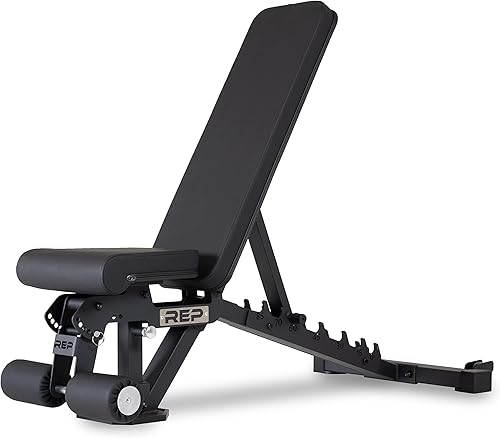
The Marcy SB-10115 Weight Bench, at $91.89 and 30 pounds with a footprint of 18 inches deep by 58 inches wide by 45 inches tall, is light and compact enough to slide in and out of a cage between exercises. At a higher budget, the Rep AB-3000 Weight Bench at $349.99 brings a heavier alloy steel build (49.44 kilograms) and more stable adjustment positions. Before purchasing any bench, confirm it fits the interior opening width of your specific cage or sits correctly under the smith machine bar at your target seat height. Most standard adjustable benches fit inside cages with interior widths of 48 inches or greater.
Verdict: Which One Should You Buy First?
Choose a power rack if you want to do barbell squats, deadlifts, overhead press, and bench press with full range of motion. It is the more versatile long-term tool for strength training, and a mid-range alloy steel cage like the Sunny SF-XF9925 at $349.99 gives you a solid entry point. Budget separately for a barbell, weight plates, and an adjustable bench to complete the setup.
Choose a smith machine if you train alone, are new to lifting, and want a built-in safety mechanism as your first priority, or if your main focus is upper-body pressing and isolation exercises rather than free-bar compound movements.
If you are not ready for either, or if your space is tight, a cable-based home gym system such as the Total XLS Home Gym at $750.00 (400-pound stack limit, 90 inches deep by 19 inches wide) provides a wide exercise variety without requiring a spotter and without the overhead clearance demands of a tall power cage. It does not replicate free-bar barbell movements, but it is a lower-barrier starting point for many home gym owners.
Gymso is an Amazon Associate and earns from qualifying purchases. Rankings and recommendations are based on verified specs and buyer demand data, not lab testing.
Common mistakes to avoid
- Setting the power rack safety bars too low before squatting: bars that sit even two inches below your sticking point will not catch a failed rep cleanly. Always set them with an empty bar first.
- Using a smith machine as a direct substitute for free-bar squatting: the fixed bar path places the bar at a vertical line that does not match most lifters' natural hip and knee tracking, which shifts load unnaturally onto the knees.
- Buying a power cage without budgeting for a barbell, weight plates, and a bench: the cage itself is only one part of the setup, and the accessories can cost as much or more than the cage.
- Not measuring assembled footprint plus bar overhang before ordering: a standard 7-foot Olympic barbell extends roughly 18 to 24 inches beyond each upright, which can make the total space requirement much larger than the cage dimensions alone suggest.
- Ignoring ceiling height: most full-size power cages stand 82 to 90 inches tall before the pull-up bar attachment is included. A standard 8-foot ceiling may leave very little usable clearance overhead.
- Purchasing the cheapest adjustable bench without checking interior cage width: a bench that is too wide will not slide inside the cage uprights, turning your pressing setup into a floor-only station.
Frequently asked questions
Can I squat safely in a power rack without a spotter?
Yes, if you set the safety bars correctly before every session. Practice with an empty bar to find the height where the bars catch the barbell just below your lowest squat depth, so you can lower the bar onto them or roll it forward off your back without being pinned. Once you establish that height, mark it with tape on the uprights so you can reset it quickly each session.
Is a smith machine good for beginners?
It can reduce early-learning risk because the built-in locking hooks let you bail out of any rep at any position without setting separate safety bars. However, the fixed bar path means you are not training the stabilizer muscles that free-bar compound lifts develop. Many coaches recommend starting with lighter free-bar work alongside smith machine training rather than relying on the smith machine exclusively for squat and bench patterns.
Will a full power cage fit in a one-car garage?
Many do, but you need to account for more than the cage footprint. Add bar overhang on each side (roughly 18 to 24 inches per side for a standard barbell), a 24-inch walkway on the remaining sides, and enough ceiling height for the pull-up bar attachment. The Sunny SF-XF9925 Power Cage weighs 134.5 pounds assembled, indicating a substantial frame; verify its exact dimensions on the product page before ordering.
Do I need a separate bench for a smith machine?
Yes. A bench positions you under the bar for flat and incline pressing. The same sizing check applies here as for a power rack: confirm that your bench reaches the correct bar height for your target movement. The Marcy SB-10115 Weight Bench at $91.89 and 30 pounds is light enough to reposition between exercises, which is practical in a tight space.
Can I do pull-ups on a power rack?
Most full-size power cages include a pull-up bar or chin-up station built into the top of the frame. For reference, the Joist JMP Pull-Up Bar is a standalone unit rated to 350 pounds, which gives you a benchmark for what quality pull-up bars support. Confirm that your specific cage model includes a pull-up bar and what its rated weight capacity is before purchasing.
Is a home gym system a practical alternative to both?
For cable-based training without a spotter requirement or significant overhead clearance, yes. The Total XLS Home Gym at $750.00 supports up to 400 pounds and measures 90 inches deep by 19 inches wide, making it narrower than most power cages. It does not replicate free-bar barbell movements, but it offers a wide variety of cable exercises and is a lower-barrier entry point for home gym owners not yet ready for a full barbell setup.