How to Choose Dumbbells: A Practical Home Gym Guide
Recommended picks


Fixed vs. Adjustable Dumbbells
Fixed dumbbells come in a single weight and are ready to use with no setup. You grab them, lift, and put them back. The trade-off is that a full range of weights takes shelf space and real money. A 2-pound pair such as the JFIT J-DBN2SET costs $9.99. A 30-pound pair such as the CAP SDN4BPIS-30 costs $32.99. If you want continuous coverage from 2 to 30 pounds, you are buying multiple pairs.
Adjustable dumbbells replace a full rack by letting you change the weight with a dial or pin mechanism. They save floor space significantly, but the mechanism adds cost and some bulk to the handle. For most home gym owners who train alone and want to keep things simple, a few fixed pairs at commonly used weights (5, 10, 15, and 30 pounds) cover the majority of exercises without complexity. Where adjustable dumbbells earn their cost is in smaller apartments or shared spaces where a full rack is not practical.
What Starting Weight Is Right for You?
The right starting weight depends on the exercise, not just your fitness level. Most beginners can row a 15-pound dumbbell with decent form but will need a lighter 2 to 5-pound pair for lateral raises or single-leg accessory work where control matters more than load.
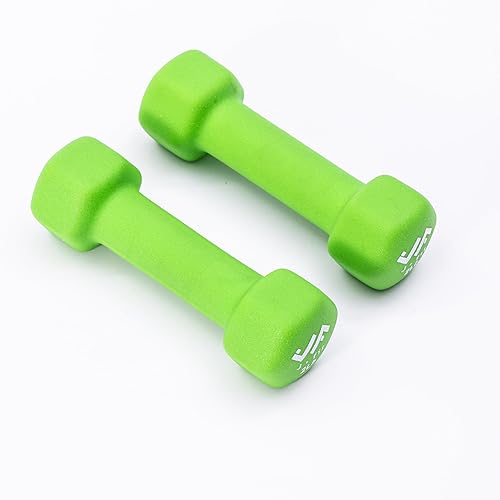
The JFIT J-DBN2SET at 2 pounds per dumbbell (cast iron with neoprene coating, $9.99) is a genuine starting point for rehabilitation, mobility circuits, and high-rep endurance work. It carries a 4.8-star rating across 7,600 reviews with 800 buyers per month, which shows real people are finding this weight useful in regular training.
For most adults beginning general strength training, a 6-pound pair such as the Amazon DB1001 (cast iron with PVC coating, $9.77) represents the most popular entry point on the market. With 127,742 reviews and over 20,000 buyers per month, this is the most in-demand dumbbell in the data. That level of volume reflects widespread use across fitness levels, not just absolute beginners.
Once you can complete 15 clean reps on your main exercises, add weight in 5-pound increments. Jumping two weight sizes at once before form is stable is a reliable path to compensations and injury.
Materials: Cast Iron, Neoprene, and PVC Coated
Dumbbells come in three common constructions at the consumer level, and each has a different feel in the hand and on your floor.
Cast iron is the baseline material. It is dense, so the dumbbell stays compact for its weight. The Amazon DB1001 uses a cast iron core coated in PVC, which cushions the head against floor damage and softens contact with other weights when stored. The JFIT J-DBN2SET also uses a cast iron core but with a neoprene coating, which is softer, grippier, and gentler on finished floors.
Neoprene-coated dumbbells such as the CAP SDN4BPIS-30 (30 pounds, neoprene, $32.99, 4.8 stars) are common in home gyms because they do not scratch hardwood and are comfortable to hold during longer cardio-style sets. Neoprene is also color-coded by weight at most retailers, which makes grabbing the right pair fast when you are moving between exercises.
PVC coating is similar to neoprene in terms of floor protection but tends to be harder to the touch. It is common on lighter pairs. Neither neoprene nor PVC adds meaningful flex to the dumbbell itself; the coating is surface protection and grip enhancement only, not a structural change.
Handle Diameter and Grip Comfort
Handle thickness affects how secure the dumbbell feels in your hand and how quickly your grip fatigues during a set. Lighter dumbbells in the 2 to 6 pound range typically have narrower handles that suit smaller hands and do not require a strong grip to control. Heavier pairs carry thicker handles that engage your forearm during compound movements, which is useful for training grip strength as a secondary benefit.
The product specs for the dumbbells in this guide do not publish handle diameter dimensions; verify the exact measurement on the product page before buying if you have small or unusually large hands. What the data does confirm is that all three top picks carry a 4.8-star rating across thousands of verified buyers, which rules out major grip comfort complaints as a widespread issue for average hands.
For most users, the handle on a standard neoprene or PVC-coated fixed dumbbell is adequate without chalk or lifting straps up to the 30-pound range. If you are moving into heavier compound work above 40 pounds, wrist straps or chalk become more relevant, and at that point the grip quality of the specific dumbbell matters more.
Storage and Floor Space
A single 6-pound pair takes almost no space. The Amazon DB1001 (2 pieces) sits easily on a small shelf or in a corner. A 30-pound pair like the CAP SDN4BPIS-30 (also 2 pieces, neoprene) is noticeably heavier to move and should live on a rack or a stable platform rather than the floor.
If you are building a range of three or more pairs, plan your storage before ordering. A simple A-frame or horizontal dumbbell rack holds multiple pairs in a compact footprint and keeps dumbbells off the floor, reducing trip hazards and protecting floor surfaces. Floor-loading is a real concern in upper-level rooms: consult a contractor about weight limits before accumulating several heavy pairs in one spot.
Dimensions for the specific dumbbells in this guide are not listed in the available specs; check the respective product pages for exact measurements if shelf or rack depth is tight in your space.
Price and Value: What to Budget
Light dumbbells are inexpensive. The Amazon DB1001 (6 pounds, 2 pieces, PVC-coated cast iron) is $9.77. The JFIT J-DBN2SET (2 pounds, 2 pieces, neoprene cast iron) is $9.99. You can cover the light end of your range for well under $25 total.
Heavier pairs cost more per unit but less per pound than lighter pairs. The CAP SDN4BPIS-30 (30 pounds, 2 pieces, neoprene) is $32.99. That is a reasonable price point for a neoprene pair in the 25 to 35 pound range and is consistent with what three or four lighter pairs would cost together.
The practical budget question is whether a few fixed pairs or a single adjustable set serves you better. Adjustable dumbbells cost more upfront but save money versus buying an entire fixed rack. Fixed pairs at two or three targeted weights cost less and have no mechanical parts to wear out. For most home gym owners starting out, buying two or three fixed pairs at the weights your program actually calls for is the lower-risk and lower-cost approach. Add more pairs as training progresses rather than buying a full range in advance.
When to Add Kettlebells to Your Dumbbell Setup
Dumbbells handle the majority of upper and lower body accessory work well. But the Free Weights and Lifting Accessories category also includes kettlebells, which serve a different training purpose and are worth considering once you have your core dumbbell range sorted.
Kettlebells such as the Amazon KB-35LB (35 pounds, cast iron, $51.99, 4.8 stars across 27,900 reviews with 5,000 bought per month) and the Yes4All K2LK (5 pounds, cast iron with vinyl, $16.62, 4.8 stars across 25,200 reviews) excel at swings, cleans, and ballistic movements where the off-center weight placement creates a training effect you cannot replicate with a dumbbell. If your goal includes conditioning circuits, hip hinging, or sport-specific movement patterns, one or two kettlebell weights are a logical complement to your dumbbells, not a replacement.
Weight plates become relevant only if you also own a barbell. They do not substitute for dumbbells for most exercises. If your current home gym is dumbbell-only and you want to handle heavier loading beyond 50 pounds, a barbell and plate setup is the practical next step rather than continuing to buy progressively heavier fixed dumbbell pairs.
Common mistakes to avoid
- Buying only one weight and expecting it to cover all exercises. Lateral raises and bent-over rows require very different loads, and using the same weight for both leads to sloppy form on one or the other.
- Starting too heavy. Moving past the 6 to 10 pound range before your form is consistent creates compensations that build bad movement habits and raise injury risk.
- Ignoring the floor. Dropping cast iron dumbbells on hardwood or tile causes real damage. Neoprene and PVC coatings reduce the impact but do not eliminate it. Use a rubber mat under your lifting area.
- Not confirming whether a listed weight is per dumbbell or for the pair. Always check the item specs and piece count on the product page before ordering to avoid receiving half of what you expected.
- Storing dumbbells on bare floor without a rack. They roll on any uneven surface and are a consistent tripping hazard. A basic rack is a safety item, not a luxury.
- Choosing adjustable dumbbells with plastic locking collars to save money. The collar is the highest-stress component on an adjustable dumbbell. A failure during a set can cause a serious injury. Check the mechanism quality before buying.
Frequently asked questions
What weight dumbbells should a beginner buy first?
A pair in the 5 to 10 pound range handles most beginner isolation work. The Amazon DB1001 at 6 pounds and $9.77 is the highest-demand option in this category, with over 127,742 reviews and 20,000 buyers per month. Add a heavier pair in the 15 to 25 pound range once your pressing and rowing form is stable.
Are neoprene dumbbells better than PVC-coated cast iron?
Neither is better for everyone. Neoprene (used on the JFIT J-DBN2SET and CAP SDN4BPIS-30) is softer to grip and gentler on finished floors. PVC-coated cast iron (Amazon DB1001) is slightly more compact for the same weight and tends to hold up longer under frequent use. Choose based on your floor type and whether you prioritize grip comfort over density.
How many pairs of dumbbells do I need for a complete home workout?
Three pairs covering a light (2 to 6 pounds), medium (10 to 15 pounds), and heavier weight (25 to 35 pounds) is a practical starting point for most programs. This lets you train upper body isolation, compound pressing, and leg accessory work at appropriate loads without filling a full rack or spending heavily upfront.
Can I use kettlebells instead of dumbbells for all exercises?
Kettlebells and dumbbells overlap for some movements (goblet squats, rows, presses) but not all. The off-center handle on a kettlebell makes it better for swings, cleans, and carries. Dumbbells are better for flyes and any exercise where you need weight directly in line with your grip. Most home gyms benefit from having both eventually. Starting with dumbbells gives you the broader exercise coverage.
Do neoprene or PVC coatings wear off with regular use?
Yes, both coatings wear over time, especially with frequent use and storage against other metal surfaces. The cast iron core underneath is unaffected and the dumbbell remains fully functional. Storing dumbbells on a rack rather than stacking them or dropping them on concrete significantly extends the life of the coating.
Is Gymso paid to rank certain dumbbells higher?
No. Gymso is an Amazon Associate and earns a commission from qualifying purchases, which funds our research. Rankings are based on buyer demand (review count and monthly purchase volume), verified ratings, material specs, and price value. No brand pays for placement. We research specs and verified owner feedback; we do not lab-test products.